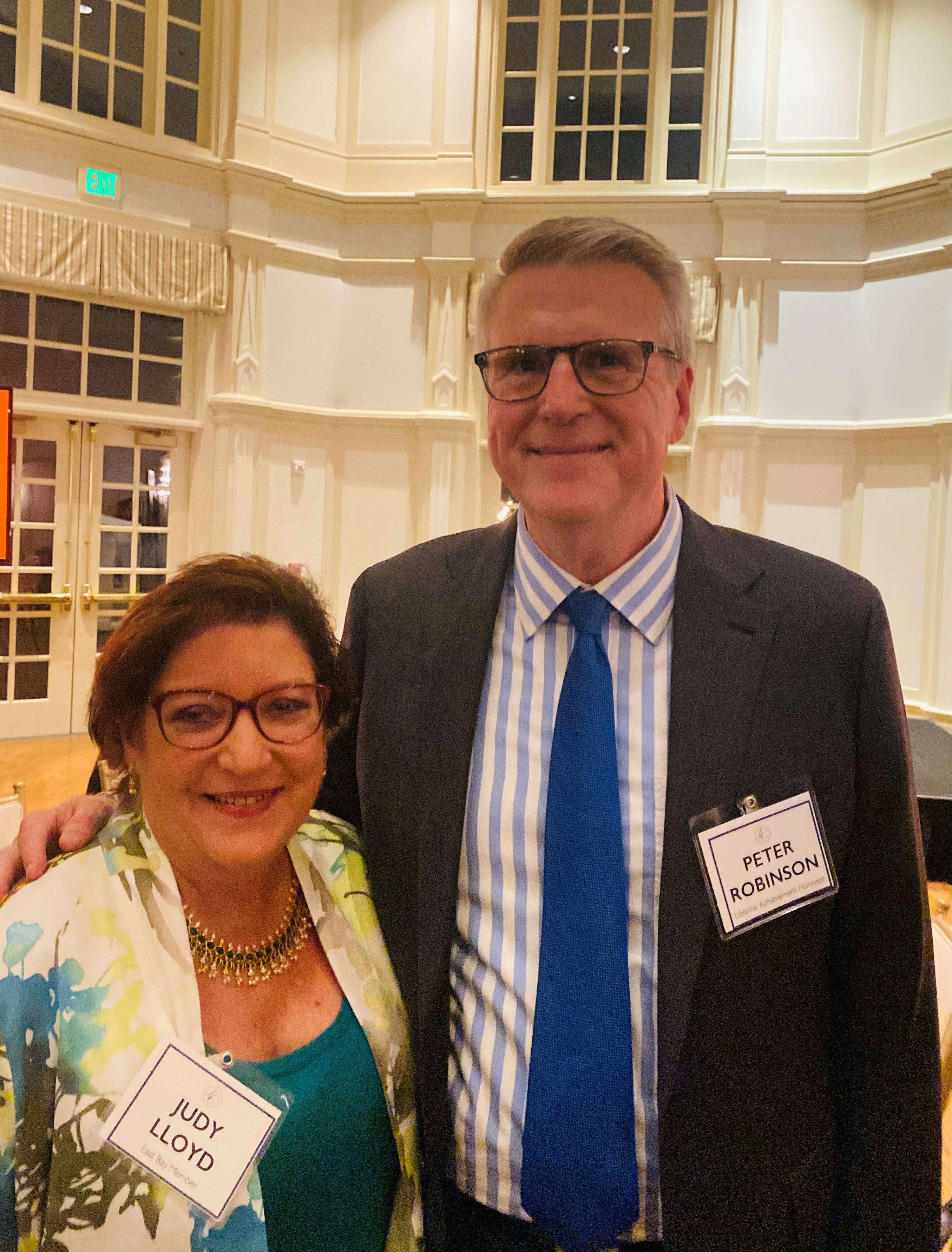
Last night, I had the chance to visit with Peter Robinson, the Murdoch Distinguished Policy Fellow at the Hoover Institution at Stanford University, who received the Lifetime Achievement Award from the Lincoln Club of Northern California.
This was a rare occasion to hear the story behind one of President Ronald Reagan’s most notable speeches at the Berlin Wall—
“Mr. Gorbachev, Tear down this wall!”
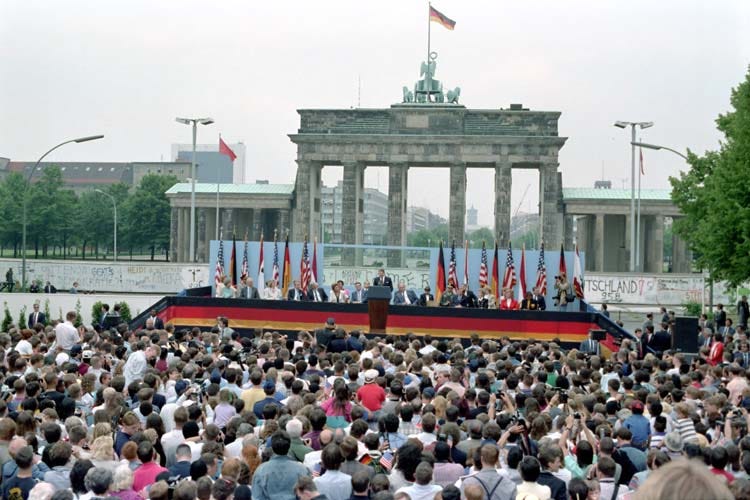
That speech in 1987 was about freedom, democracy, and eventually, the end of the Cold War. The Berlin Wall fell in 1989, symbolizing the collapse of communism in Eastern Europe, and the reunification of Germany. It solidified President Reagan’s connection with the people as The Great Communicator.
When he talked, it just made sense.
The Fall of Communism
In 1991, I had the chance to travel with Senator Bob Dole and to visit Moscow, Leningrad, Czechoslovakia, and Romania – just after the fall of communism—on a Congressional Delegation tour.
Statues were toppled. The oppressed were now free.
A peaceful, strong moment represented the transformation of global democracy. It was a disruption of the great world order.
Those of us who served Reagan, Bush, and Dole were part of the revolution that led to more money in people’s pockets, a greater sense of purpose, and a genuine love of country, regardless of party. It wasn’t about government. It was about us.
The Pendulum Swings
A generation later, many young people who vote never saw what communism looked like. They have no reference point to the long lines people stood in—just to get a bar of soap, laundry detergent or whatever the authoritarian government decided was available on a given day.
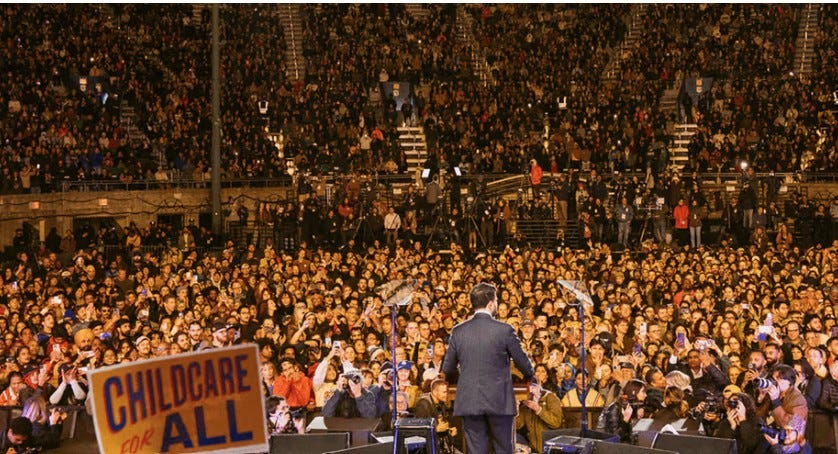
Today, we see the pendulum swinging with the election of Zohran Mamdani as Mayor of New York City. The unapologetic Democrat Socialist and star of social media will attempt his own transformation of NYC – free bus rides, government-run grocery stores, and a promise of affordability.
The irony of Mamdani’s message isn’t lost.
Affordability is exactly what Reagan was talking about too. During that era, there was more money in the Average Joe’s pocket to take care of his family.
Life was a lot simpler then. During my childhood, I never thought much about government. Both my parents worked and paid taxes. There were times when we went without things we’d like to have as kids. We knew the value of hard work. I had part-time jobs throughout my high school and college years and my own money to spend.
Today’s message is about ‘free things.’ It resonates because affordability has become harder—especially in urban areas like NYC. Today’s economy isn’t just about food on the table or a roof over your head—it’s also about keeping up with the digital demands of modern life.
The 24-hour news cycle makes people less patient. Entertainment is key, and digital noise is part of everyday life. Working people need more money for the basics as well as digital toys, gadgets and subscriptions—just to keep up.
Dependence on government and ‘free stuff’ resonates when people have fewer dollars. As a result, many places are voting for a different kind of future—not realizing the freedom they will lack with government control and bureaucracy—nor the inevitability of more taxes.
Every now and then, the pendulum needs to swing the other way—to test, to teach, and to remind us what truly works. What happens next will show us who is ready to lead and who’s willing to follow until the pendulum swings again.
Judy B. Lloyd is a communications strategist, former Reagan-Bush appointee, and founder of Altamont Communications Strategies. She writes to connect history and help us understand today’s leadership choices.